ReadNext
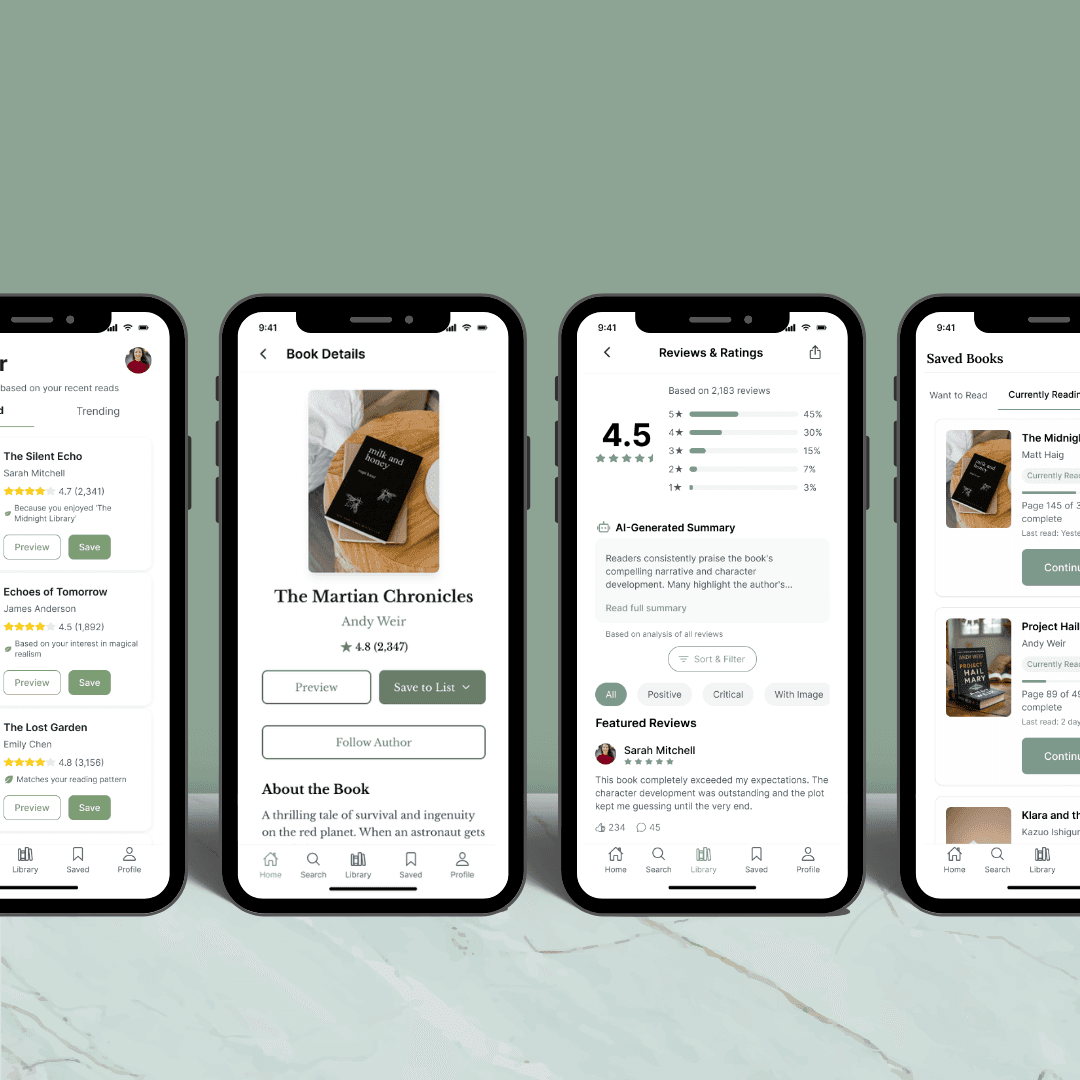
A personalized book discovery experience designed to help readers find their next great read — faster, easier, and with more joy.
Type
Class Project
Timeline
Jan 2025 – Apr 2025
Role
UI/UX Designer, Researcher
Tools
Motiff AI, ChatGPT, Julius AI, Dovetail
Problem
Readers struggle with decision fatigue and lack of trust when choosing their next book. Existing platforms prioritize commerce and generic bestsellers.
Key Insights
Discovery is Personal
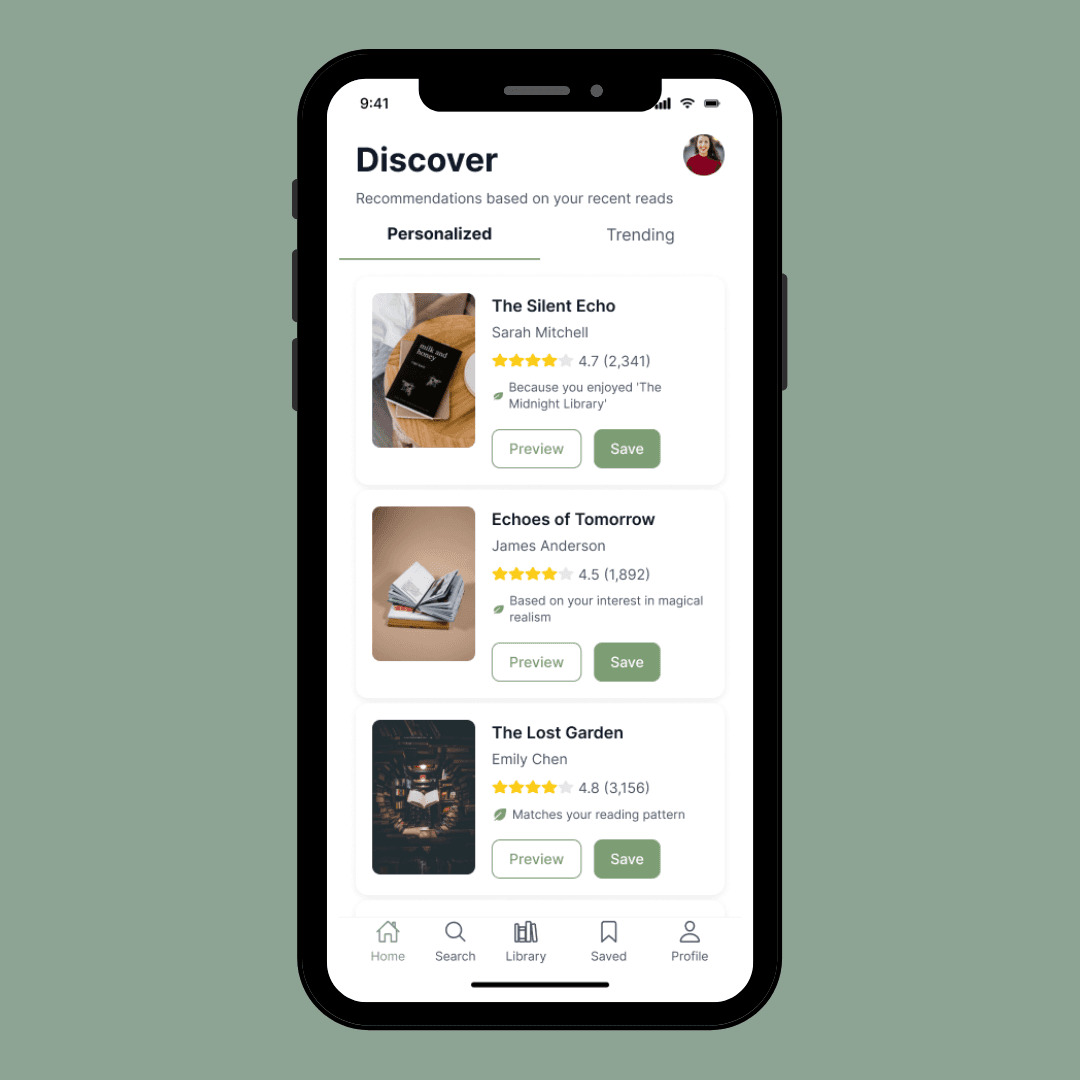
Users want context-aware recommendations for their current mood, not just similarity to past reads.
“The way it flows made me want to scroll.”
— Usability test participant
Lack of Trust
Participants consistently ignored generic top charts and craved personal curation from friends or themed community lists.
“It’s smart to include why it’s being recommended for you — and not just recommendations that are blindly coming in.”
— Usability test participant
Choice Overload
Too much visual clutter caused users to simply stop scrolling, leading to decision paralysis.
“It was not immediately clear to me that I can select more than one.”
— Usability test participant
Design Solution
Discovery
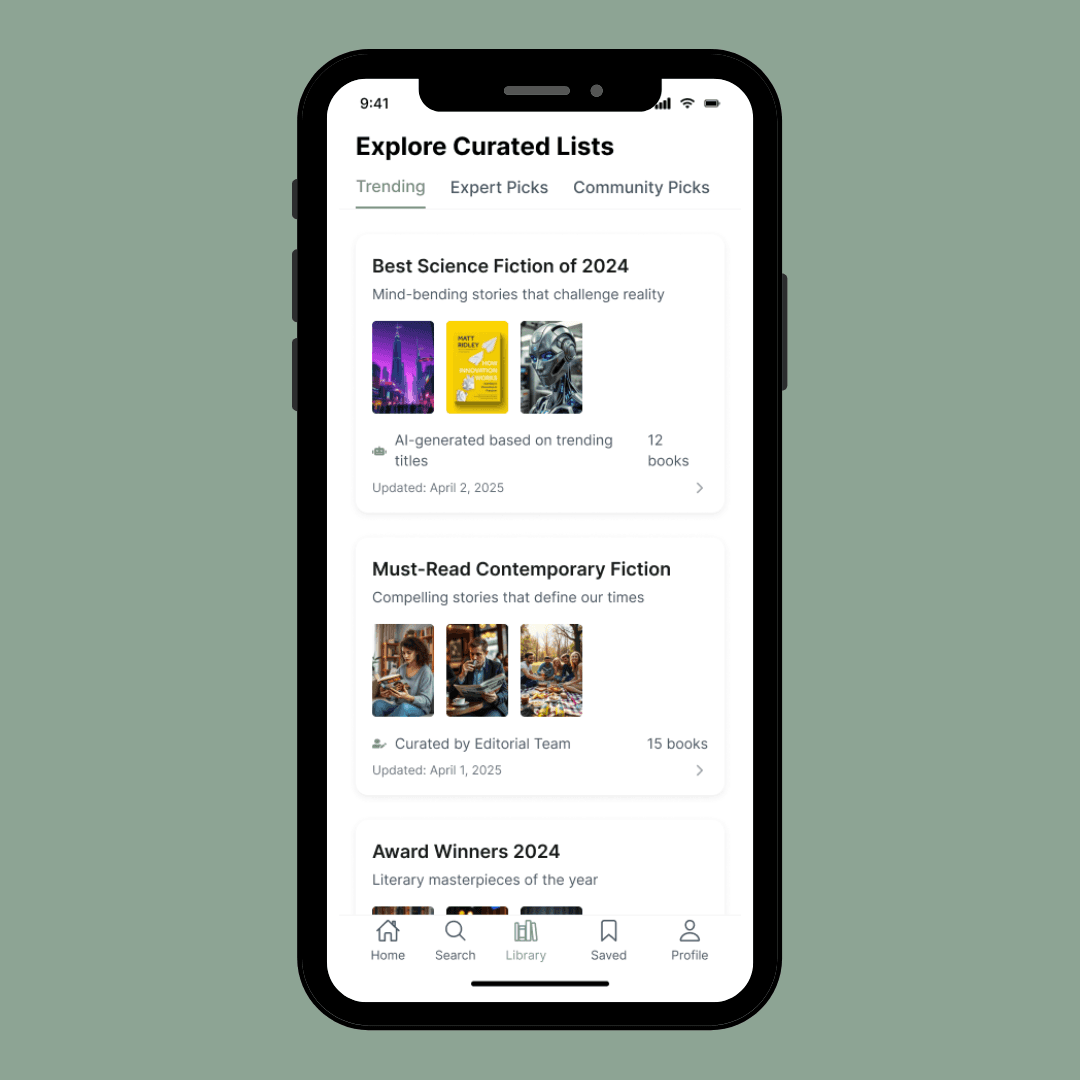
Personalized Discovery
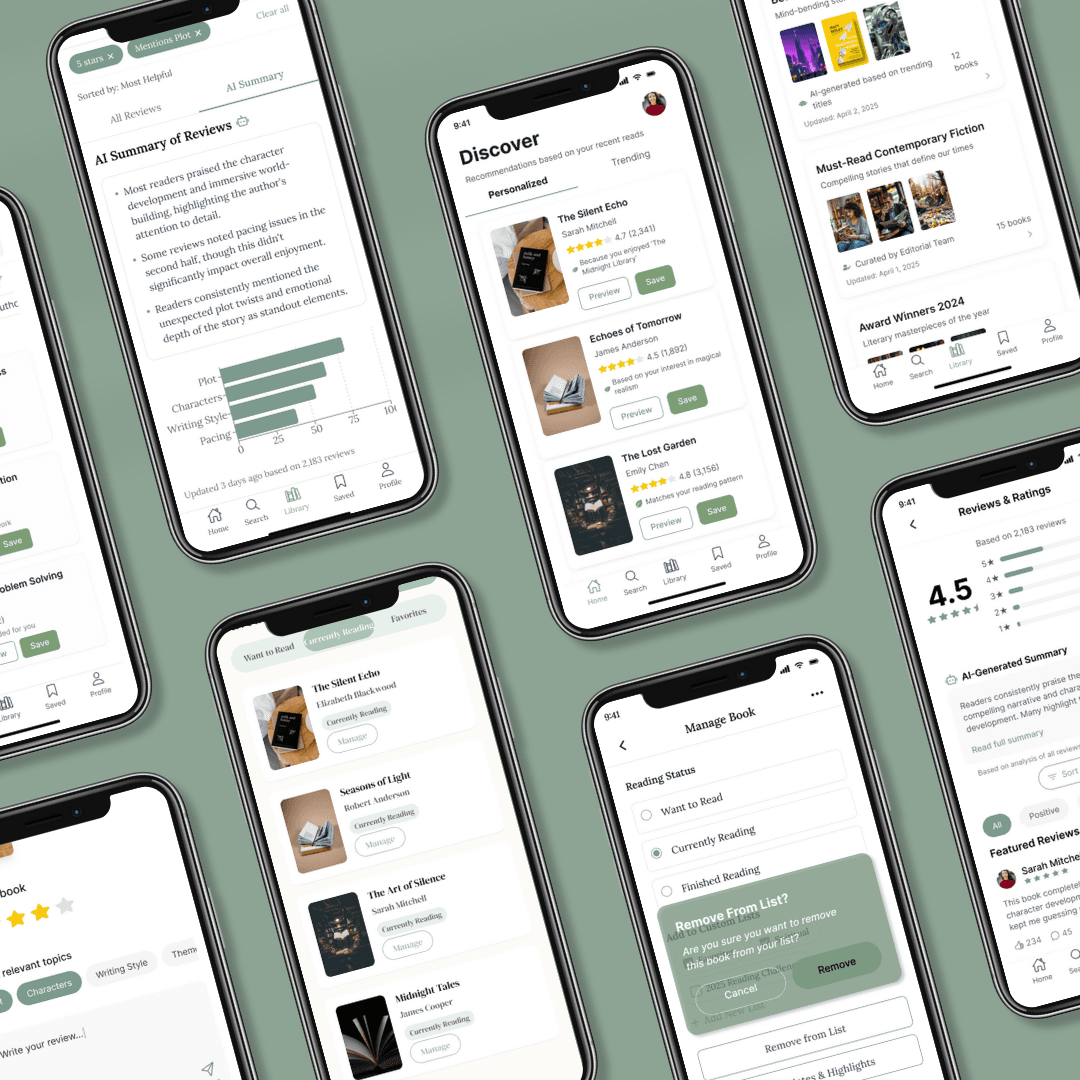
Personalized and Trending tabs with context tags like "Because you enjoyed…" so every recommendation feels earned.

Search
Smarter Search
Filter chips and preview-first cards cut visual noise — fewer results, but ones you actually trust.
Reviews
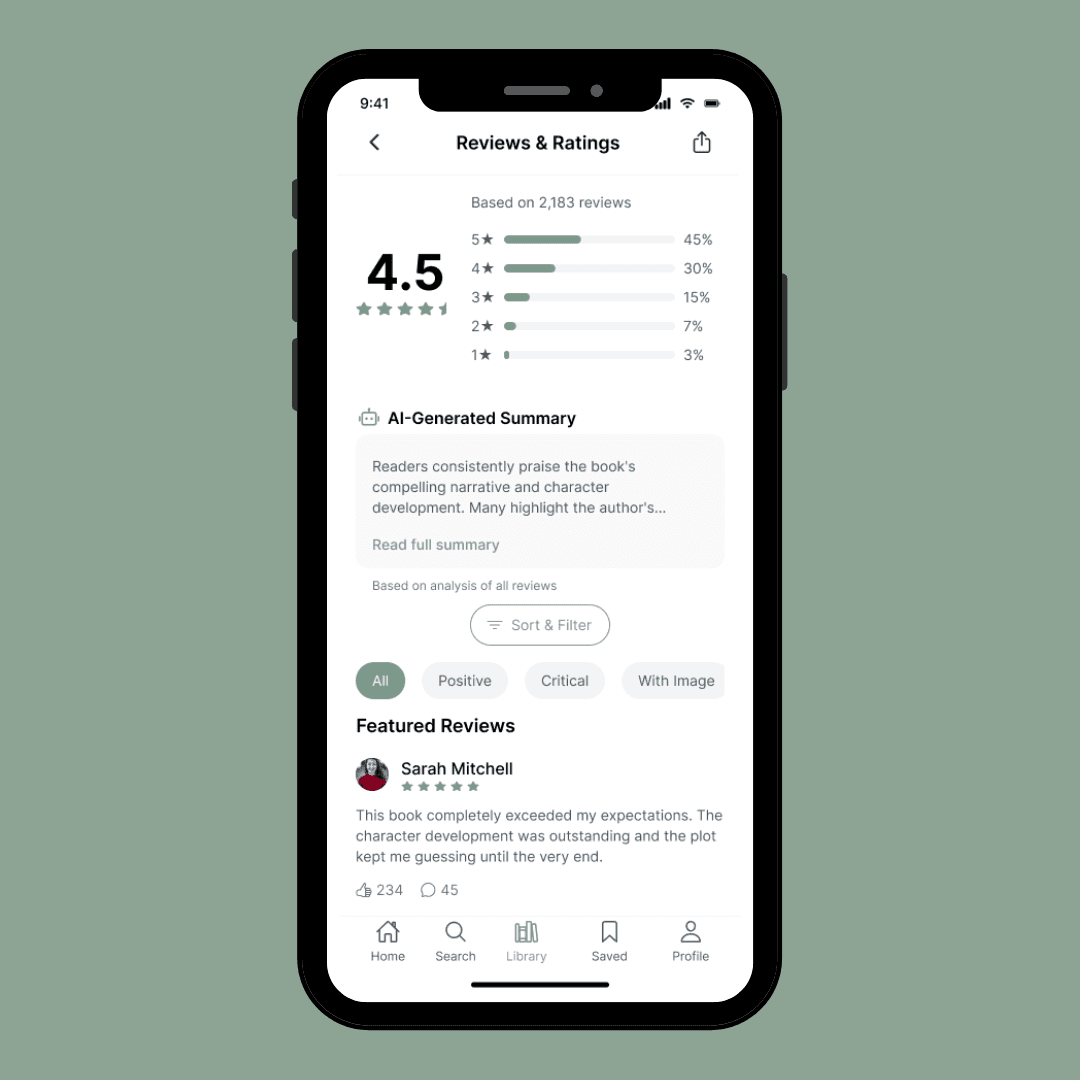
AI-Powered Reviews
Trending, Expert, and Community lists each labelled by source, so readers always know if a pick is algorithmic or human.

Tracking
Save & Track
Progress bars, page counts, and last-read timestamps — your reading life stays organised without any manual effort.
“I just really like how clean the interface is. Not cluttered, it’s easy to use.”
— Usability test participant
Usability Testing
Moderated tests with 5 avid readers across 6 core tasks. Key findings: scannability improvements for Discover and Explore tasks; filter redesign after errors in Search & Filter task; refinements to Reviews and Explore flows. Findings directly shaped the next iteration — the filter interaction was rebuilt after errors in the Search & Filter task, and the Explore flow was restructured based on navigation confusion observed across multiple sessions.
“Give me more than 280 characters. I’m not writing a tweet.”
— Usability test participant
Tools & Process
Motiff AI
Generated initial UI structures, accelerated wireframing.
Dovetail
Organized user interviews, enabled rapid pattern identification.
Julius AI
Analyzed usability data, visualized insights.
ChatGPT
Drafted interview protocols and UI microcopy.
Key Takeaways
Transparency Builds Trust
Clear explanations for why a book was recommended were crucial.
Community over Algorithm
Readers trusted community lists more than AI suggestions.
Less Is More
Summarized insights and scannable layouts improved engagement.
AI as Accelerator
Tools sped up wireframing and data analysis.