Experimental Interface · Design & Technology
The Breathing Interface
A Spatial UX Exploration: Exploring how digital interaction patterns can shape emotional states in physical space.
Type
Experimental Interface / Spatial UX
Role
Concept, Design, Motion Exploration
Timeline
Nov 2025 – Dec 2025
Tools
Spline AI, Figma
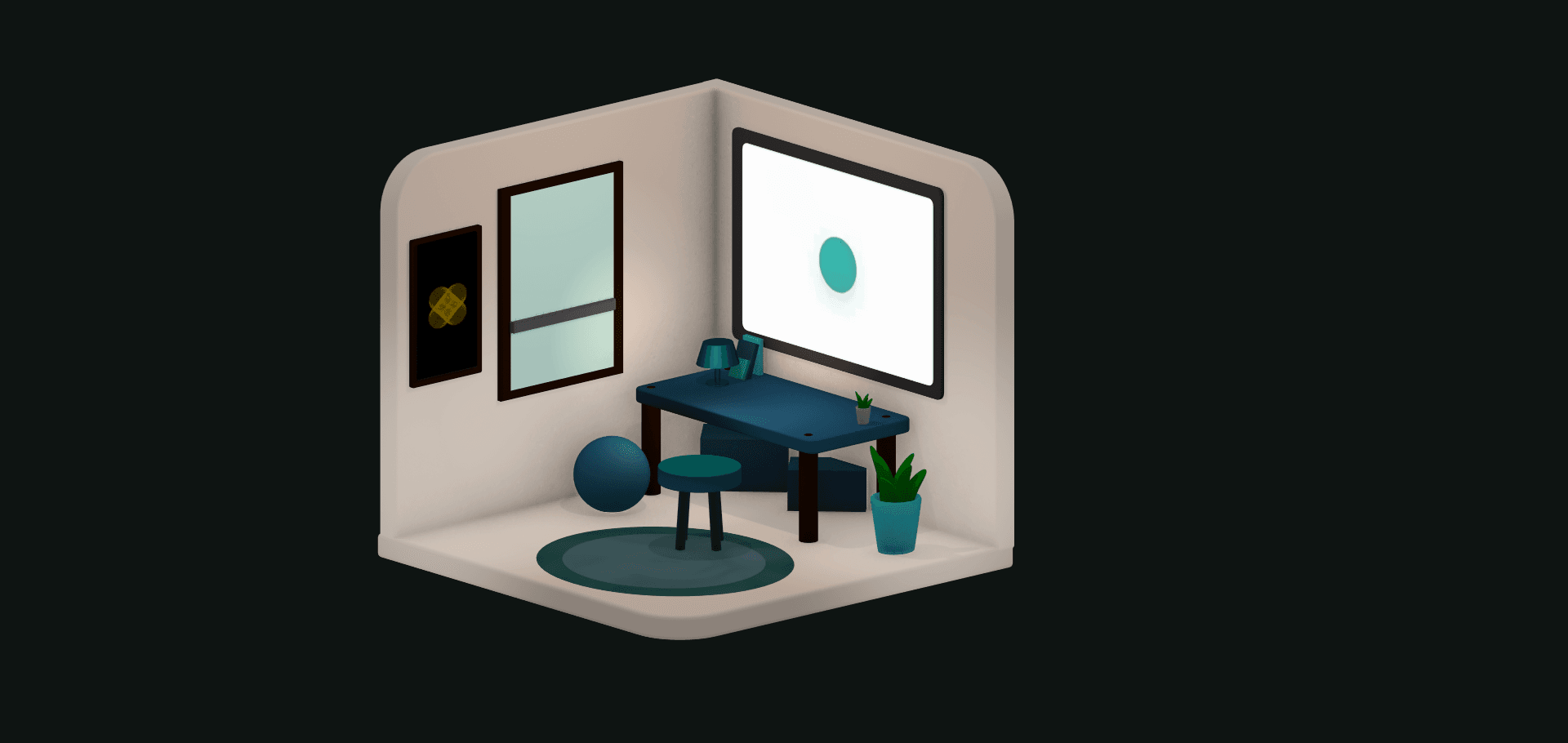
Imagine sitting in a waiting room, moments before seeing your doctor about a life-changing test result. Your thoughts race. Your breathing becomes shallow. You look up and notice a screen on the wall — not displaying information, but a single soft form, slowly expanding and contracting. Its rhythm is steady. Predictable. Calm. Without asking anything of you, the motion invites your attention. This moment is where The Breathing Interface begins.
“What happens when we design spaces that invite people to slow down, rather than ask them to act?”
The Question
Can digital interaction frameworks — such as pacing, rhythm, and minimal feedback — be adapted to spatial design to shape how people feel within a space?
.png&w=3840&q=75)
Design Intent
Motion. Minimal motion communicates without instruction.
Rhythm. Rhythm and repetition guide attention over time.
Clarity. Reducing complexity shifts focus from task completion to presence.
The Interface
A single animated form expands and contracts at a steady, predictable pace. There are no prompts, controls, or required actions. Engagement occurs through observation rather than input. The motion is continuous and intentionally non-directional — it can be entered at any moment without a defined start or end.
.png&w=3840&q=75)
A looping breathing animation designed to be experienced rather than completed.
Spatial Context
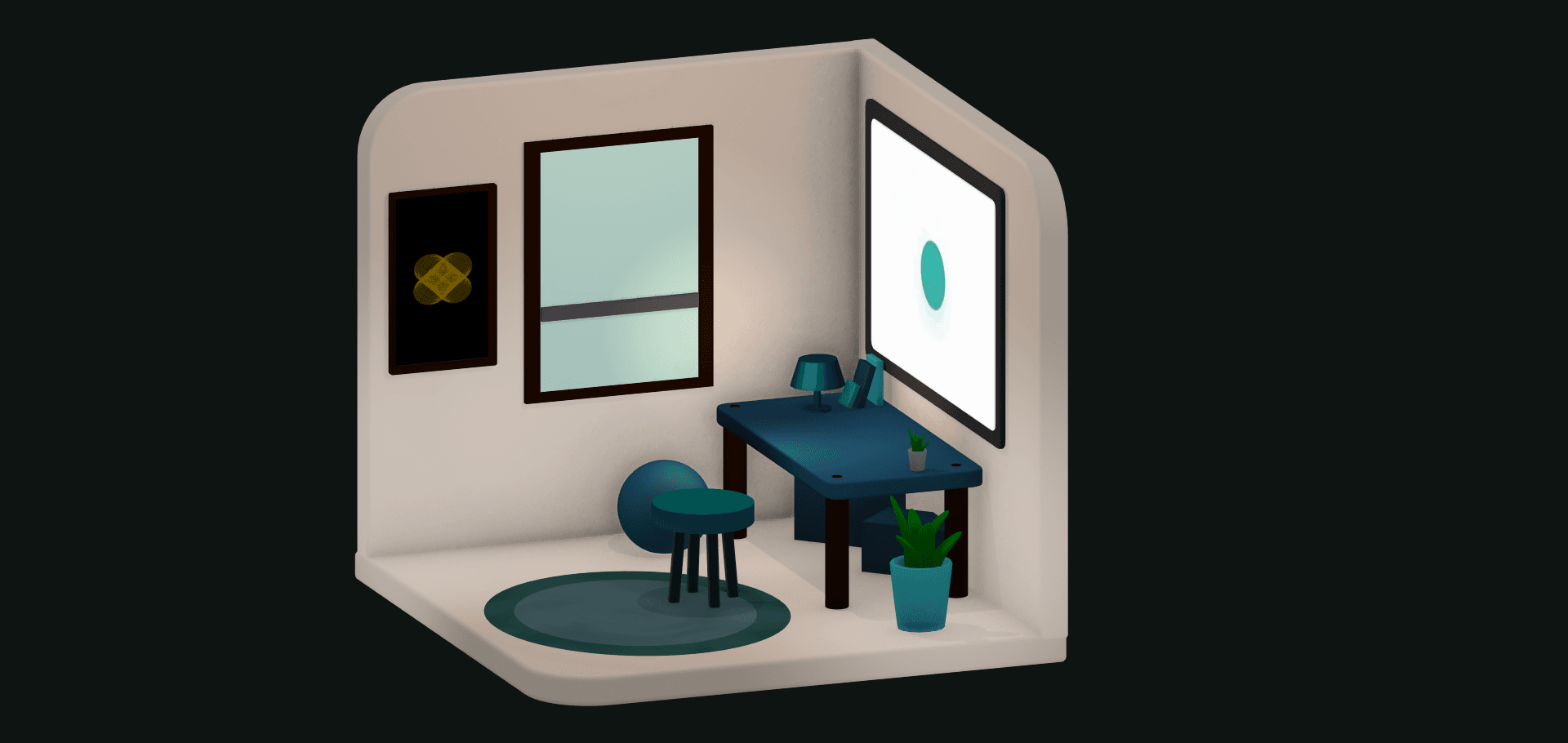
The interface was placed within a small three-dimensional environment resembling a quiet interior room. The room functions as a framing device, positioning the interface as part of a spatial experience rather than a standalone screen.
.png&w=3840&q=75)
Visual System
A limited, muted color palette. Soft edges and rounded forms. Subtle contrast between foreground and background. These choices support the motion rather than compete with it.
Reflection
The Breathing Interface is an exploratory study rather than a finished product. It was created to investigate how digital UX principles — pacing, restraint, rhythm — can influence emotional experience when applied to physical space.